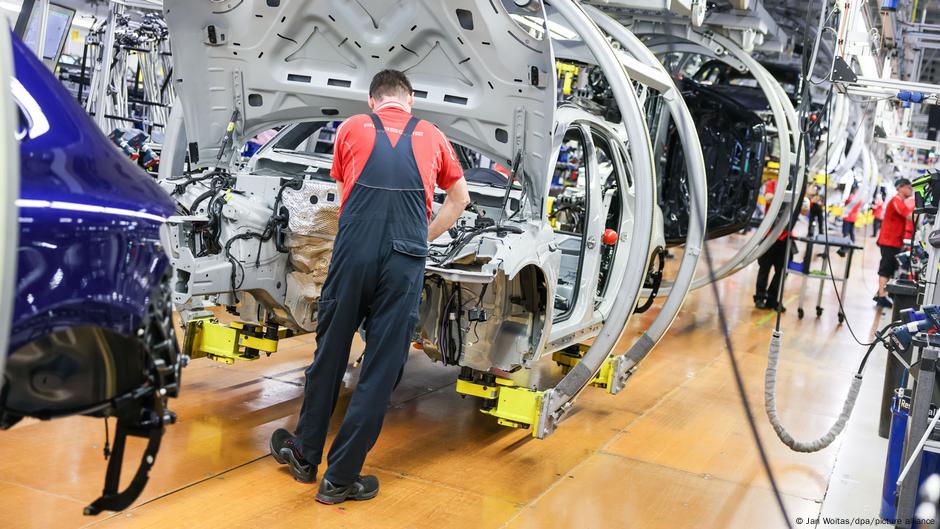
Germany's auto crisis: Can the 35-hour workweek survive?
Published 1w ago · Updated 1w ago
Covered in 2 countries
German carmakers and unions are locked in a bitter clash over working hours as employees take to the streets.
German automobile manufacturers are pushing to increase the standard workweek from thirty-five to forty hours without offering additional pay in an effort to boost competitiveness. This proposal has met fierce resistance from trade unions, who characterize the move as an unacceptable erosion of hard-won labor protections. In response to these demands, auto workers have staged mass demonstrations across the country to protect their jobs and current working conditions.
- Automakers claim the proposed longer hours are necessary to restore industrial competitiveness.
- Labor representatives argue that eliminating pay for the extra five hours constitutes an attack on worker rights.
- Employees have organized large-scale protests in an attempt to safeguard their employment status.
By the numbers
Why it matters
The dispute highlights the severe structural pressures facing Europe's largest automotive sector as it struggles with high energy costs and intense international competition.
What outlets agree on
German automotive companies are attempting to lengthen the workweek to forty hours without extra compensation, drawing sharp condemnation and protests from labor unions.
In this story
Covered by 2 outlets
100% of the sources are Center
Lean ratings via Media Bias/Fact Check
- The Straits TimesGerman auto workers stage mass protests in bid to save jobs1w ago · open ↗
- Deutsche WelleGermany's auto crisis: Can the 35-hour workweek survive?1w ago · open ↗
Similar stories




Summary and key points are AI-generated from the sources above.
Comments