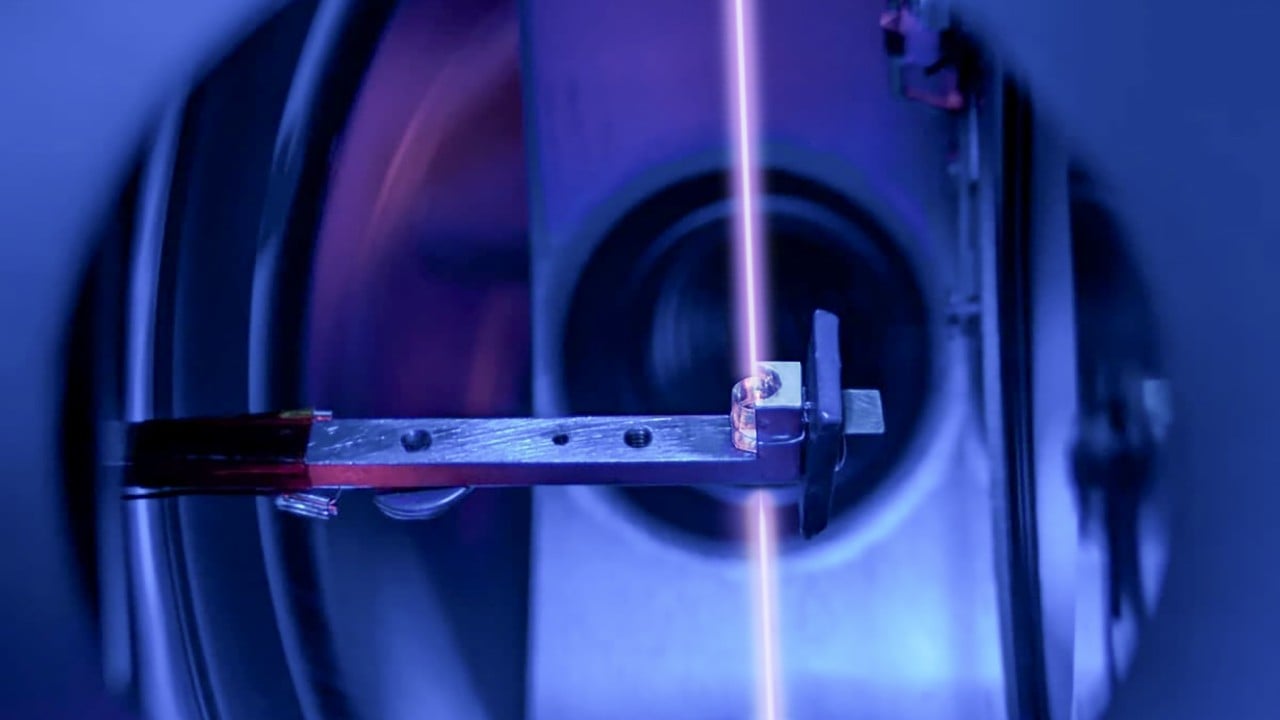
Researchers unveil first working nuclear clocks powered by thorium
Published 2h ago
Covered in 5 countries
Scientists in Beijing and Vienna have debuted the world's first ultra-precise nuclear clocks.
Independent research teams in Beijing and Vienna have successfully developed the world's first working nuclear clocks by measuring the rhythmic changes of thorium-229 nuclei embedded in crystals. These groundbreaking devices offer unprecedented precision, with the Chinese team's timepiece demonstrating six times the stability of its Austrian counterpart. The new instruments mark a major technological leap beyond traditional atomic clocks established decades ago.
- The newly built nuclear timepieces rely on the steady core rhythm of thorium-229 nuclei rather than orbiting electrons.
- Researchers at Tsinghua University in Beijing constructed the device that achieved superior stability compared to the Viennese instrument.
- Experts note that these advanced systems could potentially operate for millions of years with a margin of error of only one second.
Written from 5 of 6 outlets — 1 has since joined this story.
By the numbers
Why it matters
Ultra-precise timekeeping technology underpins global digital infrastructure, telecommunications, and navigation systems, making stability improvements vital for safeguarding against modern systemic vulnerabilities.
What outlets agree on
Research groups in Beijing and Vienna have successfully built and operated the world's first nuclear clocks using thorium-229 nuclei.
In this story
Covered by 6 outlets
67% of the sources are Center
Lean ratings via Media Bias/Fact Check, AllSides, Ad Fontes Media
- The Straits TimesScientists in Vienna and Beijing create world’s first nuclear clocks1h ago · open ↗
- The IndependentScientists invent entirely new kind of clock2h ago · open ↗
- The New York TimesIn Vienna and Beijing, the First Nuclear Clocks Begin to Tick2h ago · open ↗
Similar stories





The headline, summary and key points are AI-generated from the sources above.
Comments