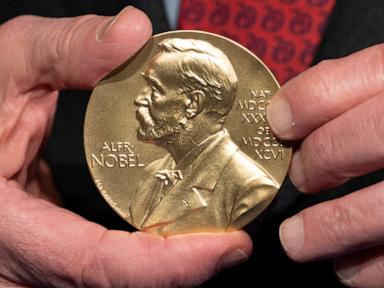
Scientists Win Nobel Prize For Organic Synthesis Breakthroughs
Published 4h ago · Latest report 1h ago
Covered in 6 countries
Henri Kagan and Kenso Soai win the Nobel Prize in Chemistry for breakthroughs in molecular asymmetry.
Henri Kagan and Kenso Soai have been awarded the Nobel Prize in Chemistry for breakthroughs in asymmetric organic synthesis. The Royal Swedish Academy of Sciences honored the researchers for discovering non-linear effects and autocatalysis. Their work sheds light on the fundamental asymmetry found in biological molecules.
- Henri Kagan is a French scientist and Kenso Soai is a Japanese researcher.
- The Nobel Committee stated the prize recognizes discoveries in asymmetric organic synthesis.
- The findings help explain the underlying mystery of why biological molecules exhibit structural asymmetry.
Written from 6 of 7 outlets — 1 has since joined this story.
1 new report since this summary was written 1h ago
Not in the AI summary yet. It is rewritten once enough new coverage arrives.
Why it matters
The Nobel Prize in Chemistry is one of the most prestigious international accolades in scientific research, traditionally awarded in Stockholm every October.
What outlets agree on
Henri Kagan and Kenso Soai were awarded the Nobel Prize in Chemistry by the Royal Swedish Academy of Sciences for discovering non-linear effects and autocatalysis in asymmetric organic synthesis.
In this story
Covered by 7 outlets
57% of the sources are Center
Lean ratings via Media Bias/Fact Check, Ad Fontes Media
- ABC News (Australia)After summaryNobel Prize in Chemistry awarded to duo for 'spectacular' chemical reaction1h ago · open ↗
- DawnFrench-Japanese duo wins 2026 Nobel chemistry prize1h ago · open ↗
- BBC NewsChemistry Nobel awarded for solving mystery of life's asymmetry1h ago · open ↗
Similar stories


The headline, summary and key points are AI-generated from the sources above.
Comments